

Marion Hanson
Marketing Executive
Your car is a finely-tuned machine that needs all of its components to be in good working order to allow it to function efficiently and correctly. One of the most important and most overlooked components is the vehicle battery
Failing to check the health of your car battery regularly can lead to breakdowns, warning lights and unexpected repair costs.
At Motia, we take driver and vehicle safety seriously, which is why we have explained everything you need to know in this article so that you can check the condition of your battery to make sure it is healthy and safe to drive. How do you check the health of your car battery?
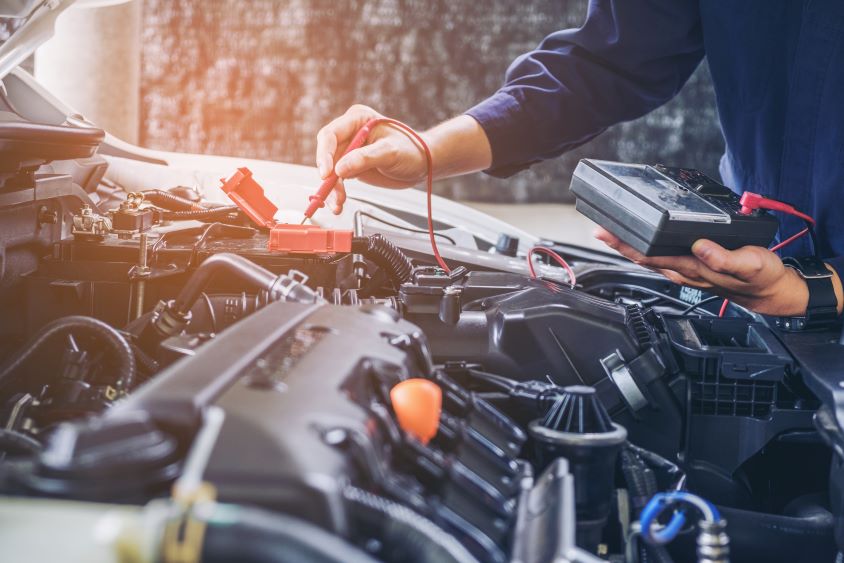
The most accurate way to check battery health is by measuring its resting voltage using a multimeter.
To test your car battery voltage, you should:
If the multimeter shows a negative reading, the leads are connected the wrong way around.
Top tip for testing a battery: Ensure no metal objects are touching the battery, as this can cause a dangerous electrical discharge.
A healthy battery should hold a charge of no less than 12.6 volts. This reading is known as the resting charge.
If the battery is any lower than 12.2 volts, it would highlight a serious problem with the battery and requires immediate professional attention.
At Motia, we’ve negotiated competitive rates for business vehicles with thousands of UK garages. So whether you need servicing, repairs, MOTs, tyres, or glass work, our Vehicle Maintenance Services could save you money at garages all across the UK.
Your vehicle’s battery powers all the electrical components of your car – everything from your headlights and indicators to your in-car heating and power steering. As a result, ensuring the battery is in proper working order and holding its charge is imperative.
According to the RAC, battery faults are the number one cause of breakdowns in the UK each year. Motorists up and down the country should therefore take note of the importance of proper battery maintenance.
Signs that your battery may need to be replaced include;
Some of the main causes of battery failure include age (batteries should ideally be replaced every five years), corrosion of the terminals, extreme hot or cold temperatures, loose cables or wiring, improperly installed electrical components, and frequent short trips that do not provide sufficient time for the battery to charge fully.
If you notice any of these warning signs, it’s important to have your battery checked.
We offer a comprehensive range of compliance solutions such as vehicle tracking, vehicle servicing and safety checks.
It’s important to get your vehicle serviced regularly so it’s always in good condition and you’re aware of any component or mechanical problems.
After all, regular servicing and scheduled maintenance can save you thousands of pounds in the long run, just take a look at the ‘5 costly repairs that can be avoided by regular maintenance’.
Contact us today to find out how we can help you save money on parts and labour, vehicle diagnostic tools, and also get useful benefits like calendar reminders.
.png)

Providing Fleet Solutions to optimise operations, cut costs, and keep your business moving.





.jpg)



















































.jpg)



























%201%20(1).webp)